


Cart
Your shopping cart is empty!
It's never too late to make things right :)


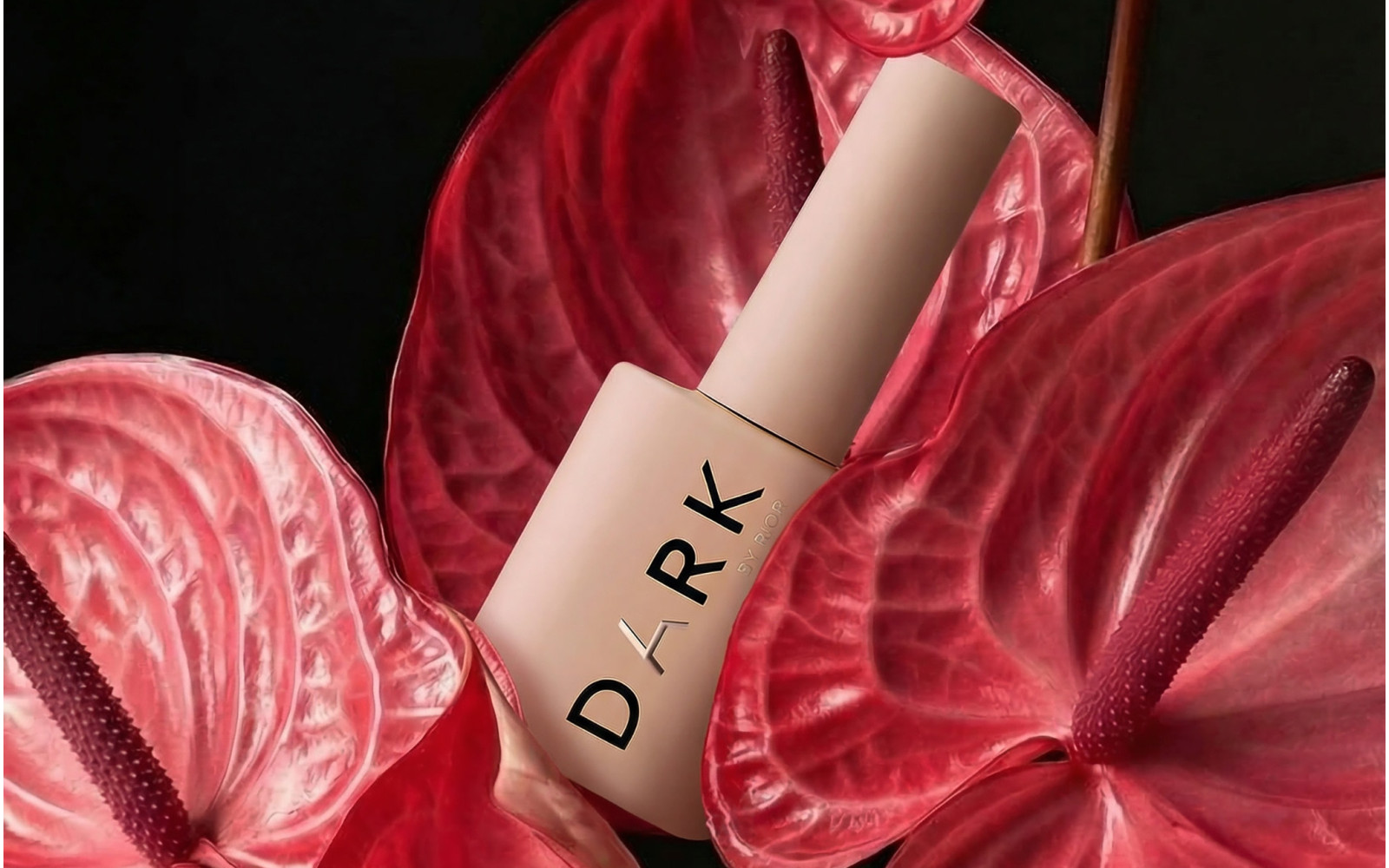
On one hand, weeks of flawless colour and shine without chipping. On the other, podiatrists' recommendations not to overload the toenail plate with rigid materials. So can you use gel polish on toes, or is it better to keep it strictly for manicures?
There is no definitive yes or no. What matters is the condition of the nails, their length, the client's footwear and lifestyle, and above all the technician's technique. On healthy nails, a thin elastic coating is perfectly acceptable. However, levelling, a rigid base, excessive material thickness and constant shoe pressure can already start causing problems.
Let us work through when a pedicure with gel polish is appropriate, when it is better to skip the coating, and why the rules for working with toenails are different from those in a manicure.
The difference starts not with the material but with the conditions the nails live in.
The foot is constantly at work: every step involves impact, rolling, bending and load redistribution. The nails play a part in that too. The natural nail plate has a degree of flexibility that allows it to adapt to those forces. A dense, rigid coating makes it less pliable.
Add closed footwear on top of that. The toes can experience pressure from above, in front and from the sides simultaneously, especially the big toe. If the nail is already close to the shoe, extra layers of material and the rigidity of the coating will certainly not work in its favour.
That is why gel polish application on toes has its own specifics: there is no need to transfer the usual manicure technique with its apex and volume levelling.
Gel polish by itself does not mean 'harmful'. What matters far more is how, on which nails and under what conditions it was applied. So is gel polish bad for toenails only when the technique is wrong?
A thin elastic coating adds minimal thickness. The situation changes when the technician creates a dense levelling layer, uses rigid material, and the client then spends hours every day in tight closed shoes.
In that case the nail absorbs load less effectively. The consequences of constant compression can include micro-trauma, pain, sub-ungual haematomas, ingrowth, plate thickening and traumatic onycholysis.
Onycholysis from gel polish on the feet can have a traumatic origin. When a rigid nail plate constantly presses against the shoe, mechanical stress builds up, and the nail may begin to separate from the bed. In other words, the problem is not necessarily in the 'chemistry' of the material; it is the mechanics that matter.
There is another important point: a dense coloured gel polish for pedicure hides the nail plate. As long as the coating is not removed, changes underneath can simply go unnoticed.
Therefore any pain, discomfort, colour change, cavity under the nail or deformation is a reason to investigate the cause first rather than cover the problem with another layer of material.
Fungus and gel polish do not have a direct causal link: the coating itself does not create a fungal infection. But if a cavity has already formed under the nail, conditions favourable to micro-organisms develop inside it. And under an opaque colour, changes are harder to spot in time.
If there are signs of a possible fungal infection, decorative coating is better postponed, and the client should be referred to a podiatrist or dermatologist.
For gel polish on toenails to be as safe as possible, several conditions must come together.
The nail plate should be healthy, free of onycholysis and deformities; the free edge should be short; and the footwear should be roomy enough so the toes do not experience constant pressure. The coating itself is kept as thin as possible, using a flexible system without levelling.
Under those conditions you can achieve a long-lasting pedicure that retains colour and shine for several weeks, does not rub off against shoes and requires no drying time after the procedure.
The main contraindications for gel polish pedicure include onycholysis or a sub-ungual cavity, a deformed or thickened plate, ingrowth, haematoma, pain on pressure, signs of a fungal infection, and a situation where the nail presses against the shoe.
An important professional principle applies here: the technician's job is not to apply the coating at any cost but to know when it is better to go without.
In summer, open footwear resolves most of the issues. In winter, conditions change: boots, thick socks and many hours in closed shoes increase compression.
That is why a winter pedicure with coating requires an especially careful approach. The free edge must be short, the coating as thin as possible, and the shoes must not press on the toes. If the client wears tight boots, walks a lot or runs, it may sometimes be wiser to suggest regular polish or to leave the nails uncoated temporarily.
In a manicure we are used to levelling, architecture and an apex. In a pedicure the logic is the opposite: the less unnecessary thickness, the better.
A base for pedicure should be elastic and applied in a thin layer. In the DARK system, Scotch Base works well for this purpose: a rubber base that adapts to the plate's movement and does not shrink. Under lighter shades, DARK Iconic Base can be used as an undercoat.
The key point is not to try to make the toenail look as visually 'perfect' as a fingernail at the cost of extra thickness.
For a hybrid pedicure, the principle 'thinner is better' runs through the entire procedure:
This gel polish application on toes technique delivers colour and durability without unnecessary thickening of the nail plate.
The fact that the coating still looks good does not mean it should stay on. The optimal guideline on how long to wear gel polish on feet is 3 to 4 weeks. Toenails grow more slowly, so after a month the colour may indeed look almost flawless. But along with the nail, the free edge grows too, gradually approaching the shoe, while the nail bed remains hidden under colour all that time.
For a dark gel polish pedicure you can choose from the core collection, which features over 300 shades in 6 ml and 10 ml formats. DARK Gel Polish has a medium viscosity, self-levelling texture and dense pigmentation. The formula is TPO-free.
In other words, a safe gel polish for toes is not a special label on the bottle. What matters more is assessing the nail's condition, choosing an elastic base, avoiding unnecessary thickness and respecting the recommended wearing period.
In Poland this procedure is often called hybrid pedicure. In essence, it is the same pedicure with a durable gel-polish coating.
A complete system requires more than just colour. Materials for gel polish pedicure include nail-plate preparation products, an elastic base, DARK Gel Polish and a top coat. The DARK website also offers products for the pedicure procedure itself, from keratolytics to finishing treatments.
You can hybrid coating for pedicure buy as a system: choose a base, a few essential shades and a top, rather than searching for a standalone gel polish.
You can buy gel polish for pedicure from DARK in two formats: 6 ml and 10 ml. The prices are 30 zl for 6 ml and 45 zl for 10 ml. The brand's warehouse is located in Poland, delivery across the country takes 24-48 hours, and orders over 350 zl qualify for free shipping. Dark by Rior gel polish buy directly from the official website.
Yes, but not by default. A healthy nail, a short free edge, comfortable footwear, an elastic base and the thinnest possible coating: these are the conditions under which dark gel polish for pedicure can be appropriate.
Onycholysis, deformation, pain, a fungal infection, tight shoes or the need to 'level' the nail with a thick layer of material are all arguments to skip the coating.
A good long-lasting pedicure is not one that can be worn for two months. It is one where aesthetics do not conflict with nail health and foot biomechanics.