


Cart
Your shopping cart is empty!
It's never too late to make things right :)

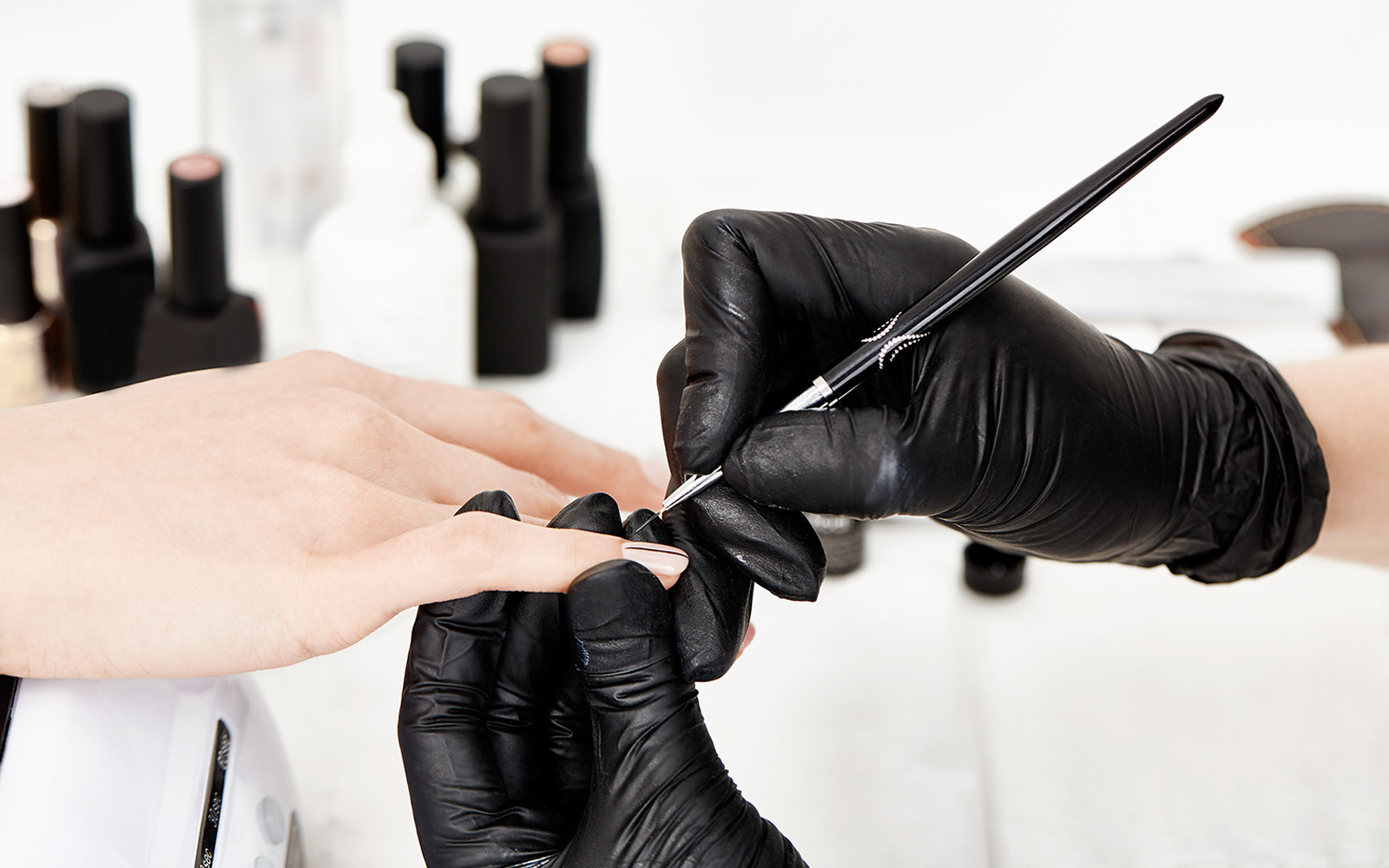
When eyes start to redden, the skin on your hands dries out, itching, a runny nose, sneezing, or a sore throat occurs — these are signals that the body cannot cope with constant contact with chemicals and dust. Unfortunately, this is quite common among nail professionals.
It is important to understand that under the word "allergy," technicians often combine several different problems. In fact, symptoms and protection methods depend on the type of reaction:
Not everything is always a true allergy. Some symptoms are related to chemical irritation caused by a single prolonged contact. However, it is precisely constant irritation and contact with uncured substances that eventually lead to true sensitization.
The primary allergens in the nail industry are acrylates and methacrylates, especially in their uncured form. These are most often associated with professional allergic contact dermatitis. The more often the material gets on the skin and the longer the contact lasts, the higher the risk. The habit of applying material to a glove, a wrist, or holding a drop of product "for convenience" is a direct path to skin problems.
Another issue is vapors. When a technician works with an open jar, the surface area of material contact with the air is larger, meaning the evaporation of volatile components is higher. A product in a wide-mouth jar creates a greater load on the body than a bottle format with a brush, which is opened only briefly. Because of this, eyes, nose, and throat may suffer more, and headaches or a feeling of "heavy" air in the office may occur.
The main thing a technician should remember: completely "hypoallergenic" materials do not exist. Any product with active monomers can potentially cause a reaction. However, the risk can be significantly reduced by not working with open material longer than necessary, preventing the product from touching the skin, using quality protection, and not ignoring the first symptoms. In this profession, protection is a basic condition for maintaining health and the ability to work.