Cart
Your shopping cart is empty!
It's never too late to make things right :)

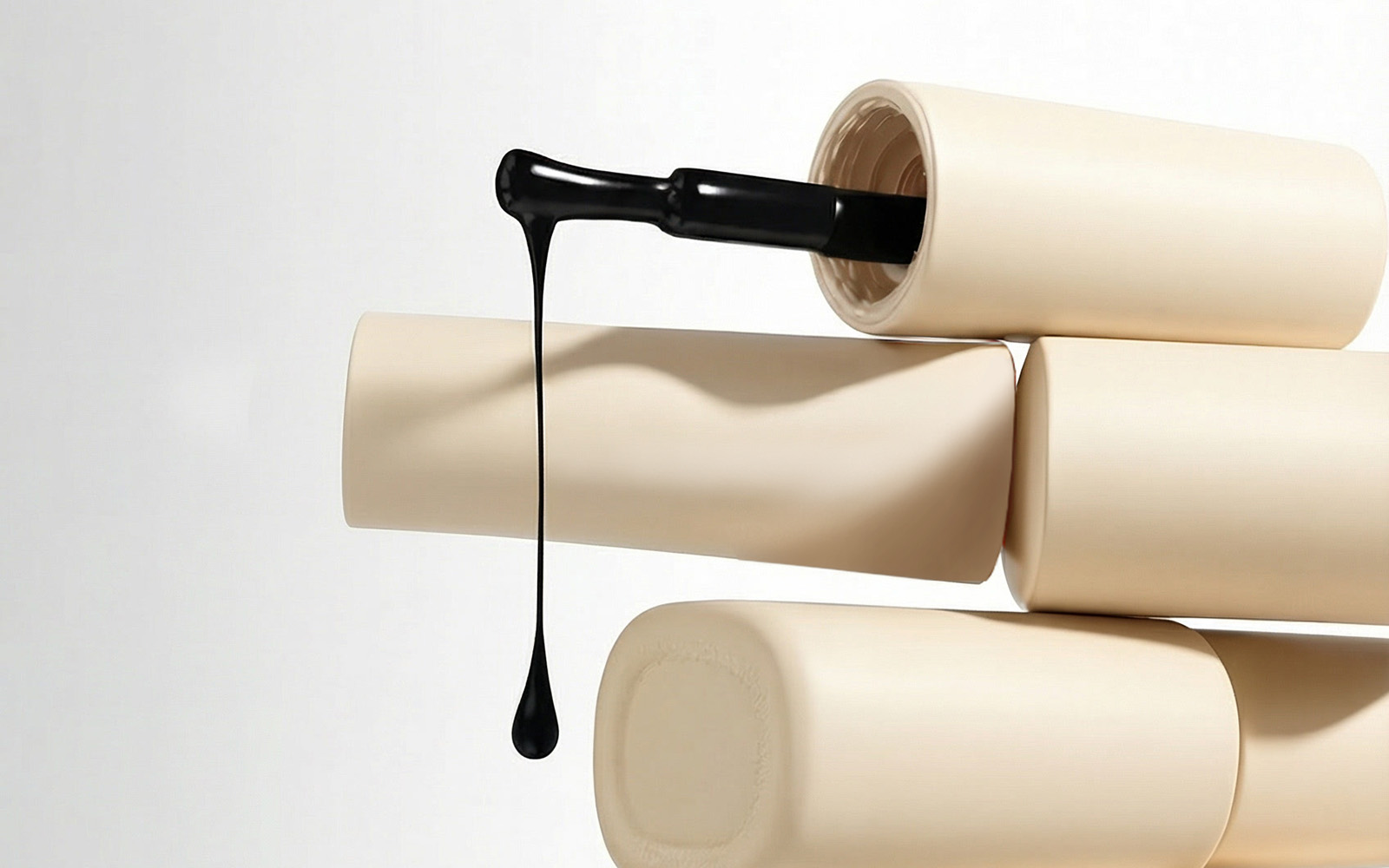
Highly pigmented, dense gel polishes look impressive, but they are often the ones causing the most trouble for technicians: the coating bubbles up and remains wet inside.
This issue isn't related to the client, the base coat, or the gels themselves, but is solely a matter of the gel polish's chemistry and optical properties.
The composition of a gel polish includes only:
Film formers;
Pigments;
Photoinitiators.
However, there are no components that provide deep three-dimensional polymerization, as seen in gels or bases. Therefore, gel polish on its own always polymerizes more "superficially". When black or yellow pigments are present in the formula (for example, deep emerald shades, browns, and grey-greens), the situation becomes more complicated: these two pigments create strong optical scattering of UV light.
As a result:
The upper part of the layer hardens;
The lower part remains wet;
The material begins to bubble and wrinkle.
This is pure physics, which is difficult to fix with chemistry, but can still be influenced.
For stable polymerization of pigmented gel polishes, the lamp must have a UV density of at least 30 mW/cm².
But even with sufficient light density, there is a limitation: gel polish by its nature is not designed for deep polymerization. It was originally created as a thin decorative coating. Therefore, if a shade contains "heavy" pigments (especially black and yellow), the lamp physically cannot "pierce" the layer deeper than the chemical structure of the material itself allows.
Apply the thinnest layers possible. The thinner the layer, the higher the chance of complete curing.
Work only with lamps that provide at least 30 mW/cm². This is the minimum indicator at which the UV flux can at least partially compensate for the scattering created by black and yellow pigments.
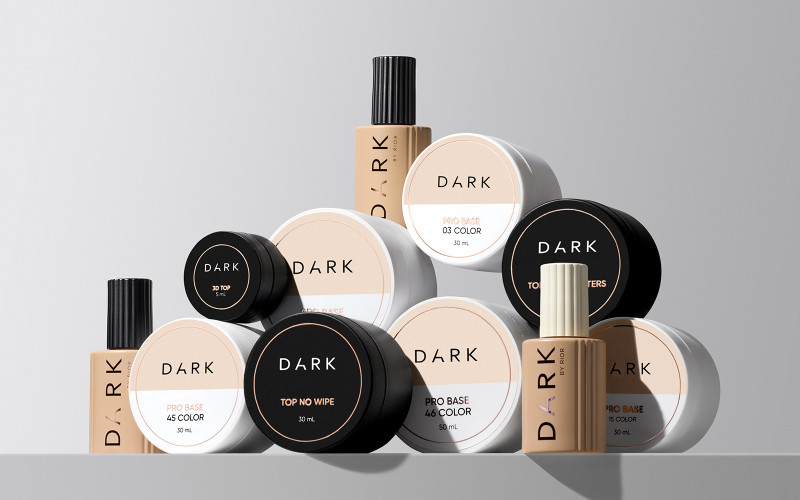
This is exactly why at DARK we develop pigmented shades for stable professional work.
We inherently take into account those very limitations of optics and chemistry: we balance pigments and test complex dark and dense colors in real-world conditions using different lamps so that every technician's coating is predictable.
We are honest — dark, dense, and "heavy" shades always require the correct application technique, and we always train technicians on the rules for working with each material.
In DARK gel polishes, we have thought everything through in advance so that even complex shades provide maximum stability and results.

-800x500.jpg)