


Cart
Your shopping cart is empty!
It's never too late to make things right :)

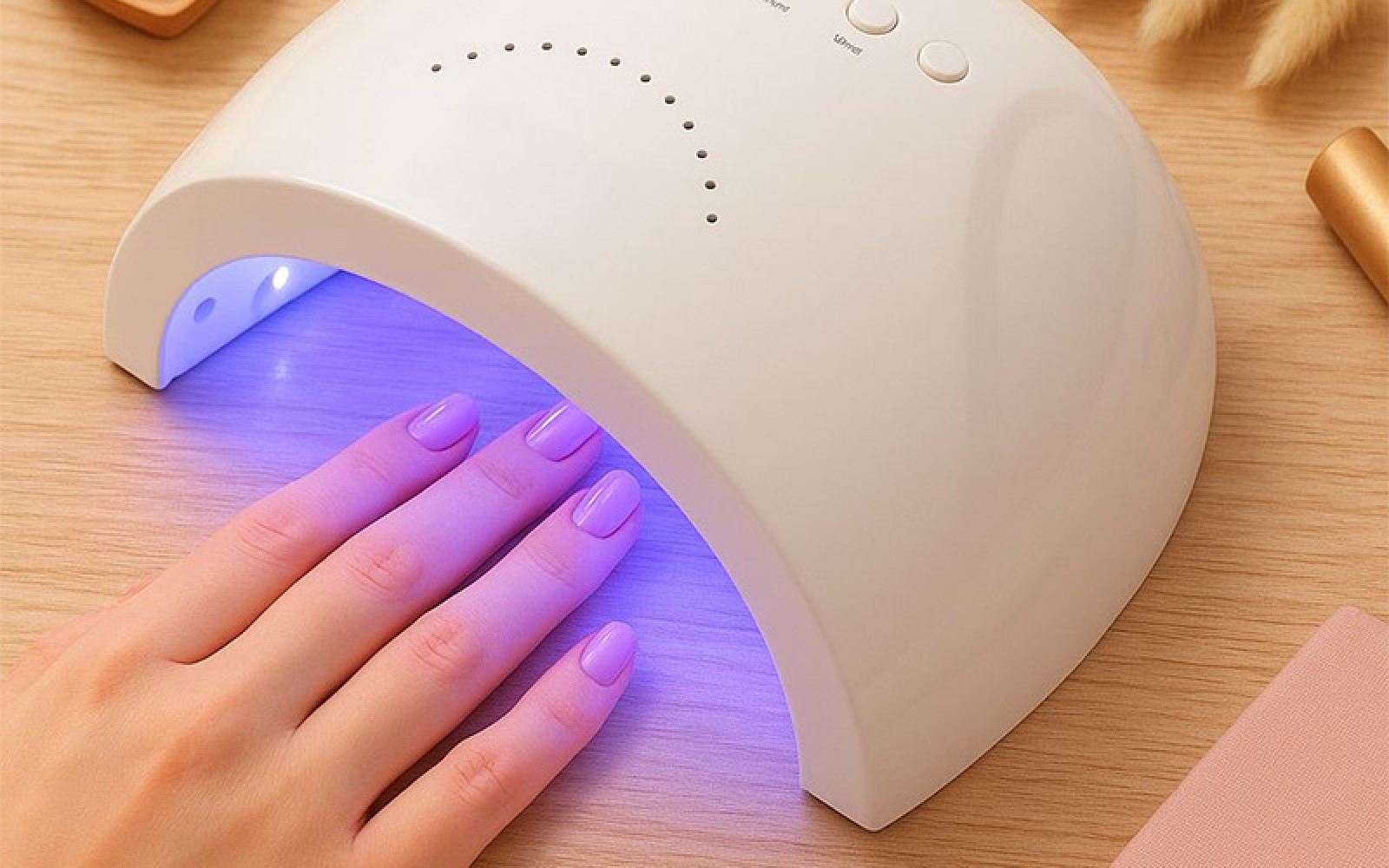
In the nail industry, it is common for lamps with the same stated wattage (W) to provide different levels of gel polish polymerization. The formal wattage value does not reflect the lamp's actual ability to achieve deep and stable curing of the material. The key parameter in this process is UV irradiance (mW/cm²), which determines the amount of energy reaching the surface of the coating per second.
The wattage value represents the device's electrical power consumption and does not characterize the UV irradiance required for gel polish polymerization. A lamp with high power consumption may have low UV irradiance if the following factors are present:
Therefore, the "Watt" rating is not a technical criterion for polymerization quality.
UV irradiance (or power density) reflects the amount of energy that reaches 1 cm² of surface area per unit of time. This metric directly affects the lamp's ability to initiate the polymerization reaction throughout the entire thickness of the gel polish layer.
35–50 mW/cm² — the range that ensures stable polymerization for most shades.
≥ 30 mW/cm² — the minimum value required for the correct curing of dark, highly pigmented gel polishes.
Values below 30 mW/cm² lead to incomplete curing of the material, even if the polymerization time is increased.
Problematic shades are, in most cases, those containing black and yellow pigments. These components alter the passage of UV rays in the following ways:
They create significant optical scattering;
They reduce the depth of UV energy penetration.
As a result, the gel polish in the lower part of the layer remains incompletely cured, leading to bubbling and coating instability.
Discrepancies occur due to:
The absence of UV irradiance specifications in technical documentation;
Intentional simplification of characteristics by manufacturers;
Incorrect selection of diode types and electronics;
A lack of certification.
As a result, two lamps with the same wattage (W) can have a 1.5–2x difference in UV irradiance and demonstrate significantly different results.
The efficiency of gel polish polymerization is determined not by the lamp's electrical wattage, but by the UV irradiance it actually delivers to the working surface. For stable curing, especially of dark pigmented shades, values of 30 mW/cm² and above are required, with the optimal range being 35–50 mW/cm².
A correct assessment of technical specifications allows for minimizing the risks of incomplete polymerization and increasing the reliability of the coating in professional practice.

-800x500.jpg)